



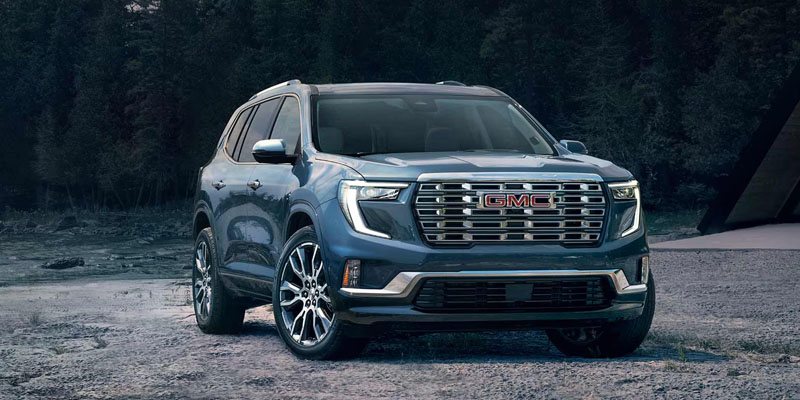
You notice it in the first five minutes. Not the badge. Not the spec sheet. The way the steering weights up as you pull out of the lot. The way the cabin either settles you in or leaves you adjusting the seat again at the next light. The GMC Acadia and Toyota Highlander both aim at the same job, though they go about it differently. Spend a bit of time in each around McMinnville, OR, and the gap starts to show in small, telling ways.
Interior Space and Comfort
The GMC Acadia gives you room to work with. Seating for up to 8 comes with a layout that feels open rather than packed in. Cargo space reaches up to 97.5 cu. ft., which makes a difference when the back is loaded with gear, groceries, or a weekend’s worth of plans.
Higher trims push comfort further. The Denali brings leather-appointed seating, while the Denali Ultimate adds features like massaging front seats. Those details are not about showing off. They matter on longer drives, especially when the road stretches out beyond town.
The Toyota Highlander also seats up to 8 and stays comfortable, though cargo space tops out at 84.3 cu. ft. The interior leans more toward function. It does the job well, though it does not reach the same level of finishing or flexibility as Acadia.
Technology That Feels Natural
The Acadia centers everything around a 15-inch Premium GMC Infotainment System with Google built-in. The size helps, though the real advantage is how it works. Navigation, voice control, and media all feel integrated rather than layered on top.
Wireless Apple CarPlay® and Android Auto™ come standard, so your phone connects without effort. Up to nine camera views and an available Head-Up Display keep key information in sight when maneuvering or driving through tighter spaces.
Highlander offers an 8-inch standard screen or an available 12.3-inch upgrade. It covers the basics well, though it feels more conventional in how everything is laid out. It works, though it does not feel as cohesive as the Acadia’s setup.
Driving Feel and Performance
The GMC Acadia runs a 2.5L Turbocharged engine rated at 328 hp and 326 lbs. ft. of torque, paired with an 8-speed automatic transmission. It pulls cleanly and feels composed when merging or passing. The response is steady, which builds confidence over time.
The AT4 trim adds an Active Torque Control AWD system and an off-road-tuned suspension. It gives the Acadia a bit more range when the pavement ends or the road gets rough.
The Toyota Highlander uses a 2.4L Turbocharged engine with 265 hp and 310 lbs. ft. of torque. It performs well in daily driving, though it feels less eager when pushed. AWD is available, though it does not carry the same off-road focus as the AT4.
Safety and Driver Support
The GMC Acadia includes over 19 standard safety and driver-assist features. Enhanced Automatic Emergency Braking, Blind Zone Steering Assist, HD Surround Vision, and Rear Cross Traffic Braking all come included. Intersection Automatic Emergency Braking adds another layer of awareness in busy areas.
The Highlander uses Toyota Safety Sense™, which covers key features as well. Some elements vary by trim level, which can change what you get depending on configuration.
The Acadia keeps more of its safety features standard across the lineup, which simplifies the decision.
Take the GMC Acadia Out and See the Difference
You can read numbers all day. They only tell part of the story. The rest shows up when you’re in the driver’s seat, pulling onto a road you know, noticing how the SUV responds without thinking about it.
Stop by Lum’s GMC of McMinnville and take the Acadia out for a proper drive. Bring the family. Load up a few bags. Spend more than a quick loop around the block. It does not take long to figure out which one fits your day better.
Connect with us
